A patient's guide to understanding ACL reconstruction, how the graft is chosen, and when a lateral extra-articular tenodesis (LET) is added.
This article is for educational purposes only. It is not a substitute for medical advice. Always consult your physician before starting or changing treatment.
Understanding the ACL
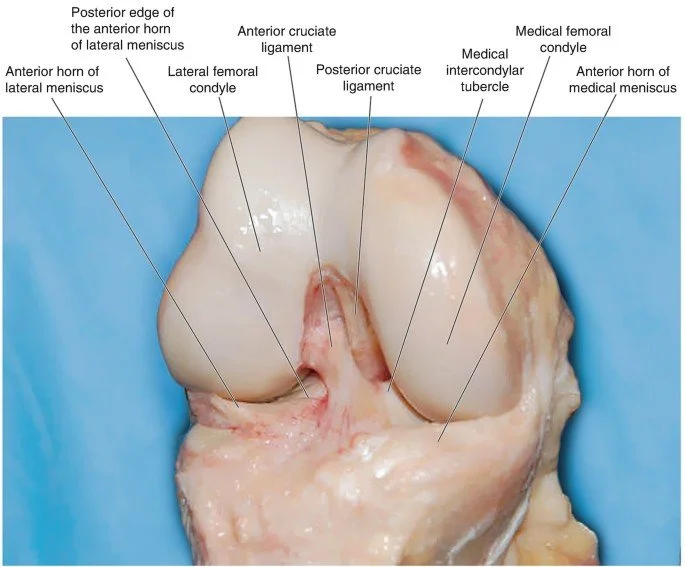
The anterior cruciate ligament (ACL) is one of the four major ligaments of the knee. It runs diagonally through the center of the joint, connecting the femur (thigh bone) to the tibia (shin bone), and is the primary restraint against forward translation and rotational instability of the knee.
The ACL is most commonly torn during non-contact mechanisms — a sudden deceleration, pivot, or change of direction that places excessive rotational force on the knee. It is one of the most common sports injuries, affecting approximately 200,000 people in the United States each year.
Unlike many ligaments, the ACL does not heal reliably on its own once completely torn. The intra-articular environment of the knee — bathed in synovial fluid — prevents the biological healing response that occurs in other tissues. Surgical reconstruction is typically required for patients who wish to return to pivoting, cutting, and contact sports.
When is surgery recommended?
Not all ACL tears require surgery. In lower-demand patients — older individuals, those who do not participate in pivoting sports, or those willing to permanently modify their activity level — non-surgical management with physical therapy and bracing can be successful.
However, surgical reconstruction is generally recommended for:
• Athletes who wish to return to cutting, pivoting, or contact sports
• Young active patients, particularly those under 25
• Patients with combined injuries — ACL tear with meniscus or cartilage damage
• Patients who experience functional instability during daily activities despite rehabilitation
The timing of surgery also matters. Operating in the acute phase — within the first week after injury — on a stiff, swollen knee increases the risk of post-operative stiffness (arthrofibrosis). Most surgeons prefer to wait until the acute swelling has resolved and range of motion has been restored, typically 3 to 6 weeks after injury.
What is ACL reconstruction?
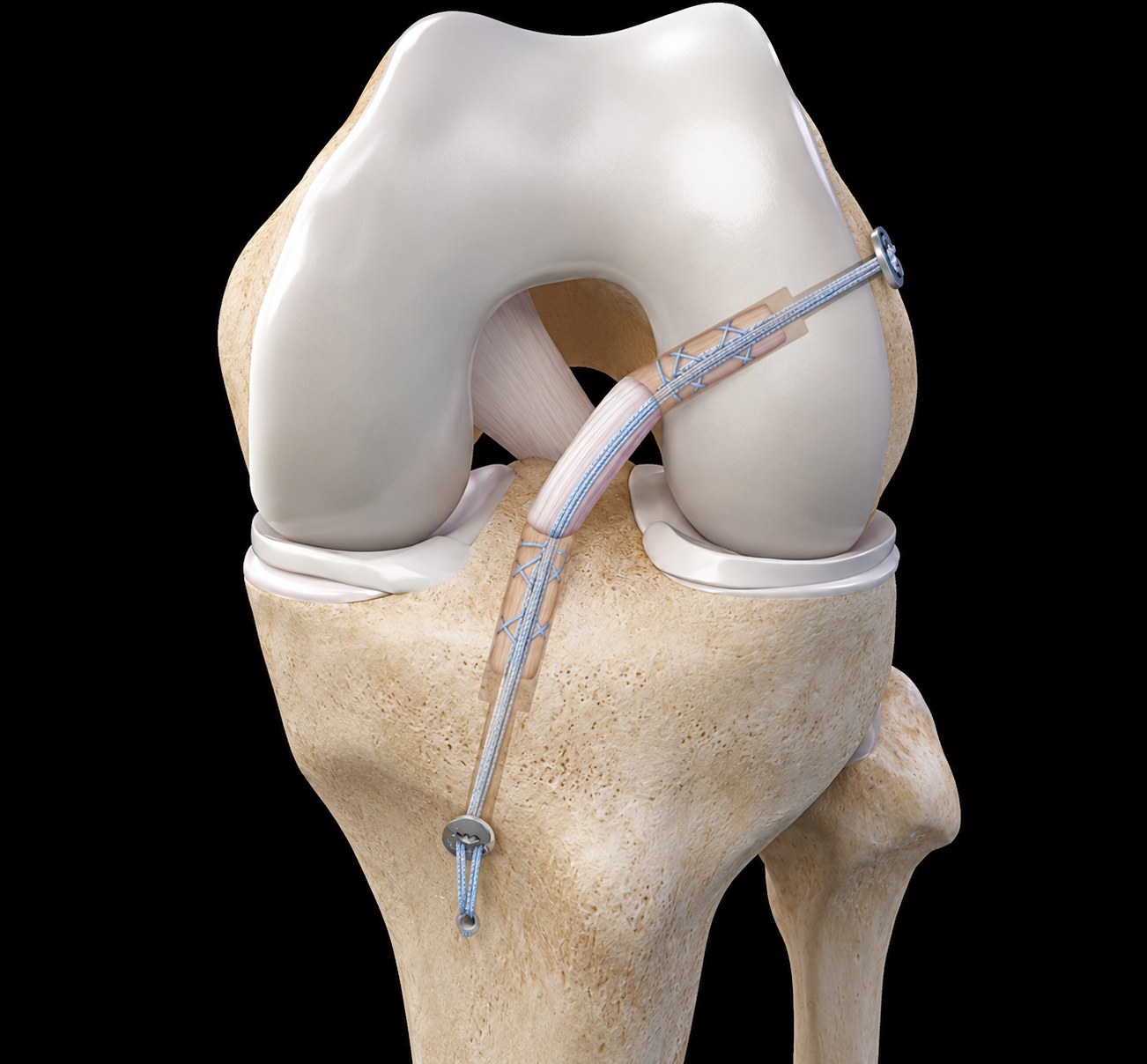
ACL reconstruction involves replacing the torn ligament with a tendon graft that, over time, undergoes a biological process called ligamentization — gradually transforming into functional ligament tissue. The surgery is performed arthroscopically through small incisions.
Bone tunnels are drilled into the femur and tibia at the anatomic positions of the native ACL. The graft is passed through these tunnels and secured with fixation devices — screws, buttons, or a combination — that hold the graft in place while it heals into the bone.
The graft is not immediately a functioning ligament. It goes through phases of healing — initially weakest in the first 6 to 12 weeks as the original cells die off, then gradually remodeling over 12 to 24 months into mature ligament tissue. This biological timeline is the reason return to sport cannot be safely accelerated purely based on time.
Graft options
Graft selection is one of the most important decisions in ACL reconstruction. The graft provides the mechanical scaffold for the new ligament, and different options carry different trade-offs in terms of strength, healing biology, donor site morbidity, and re-rupture risk.
Patellar tendon (bone-tendon-bone)
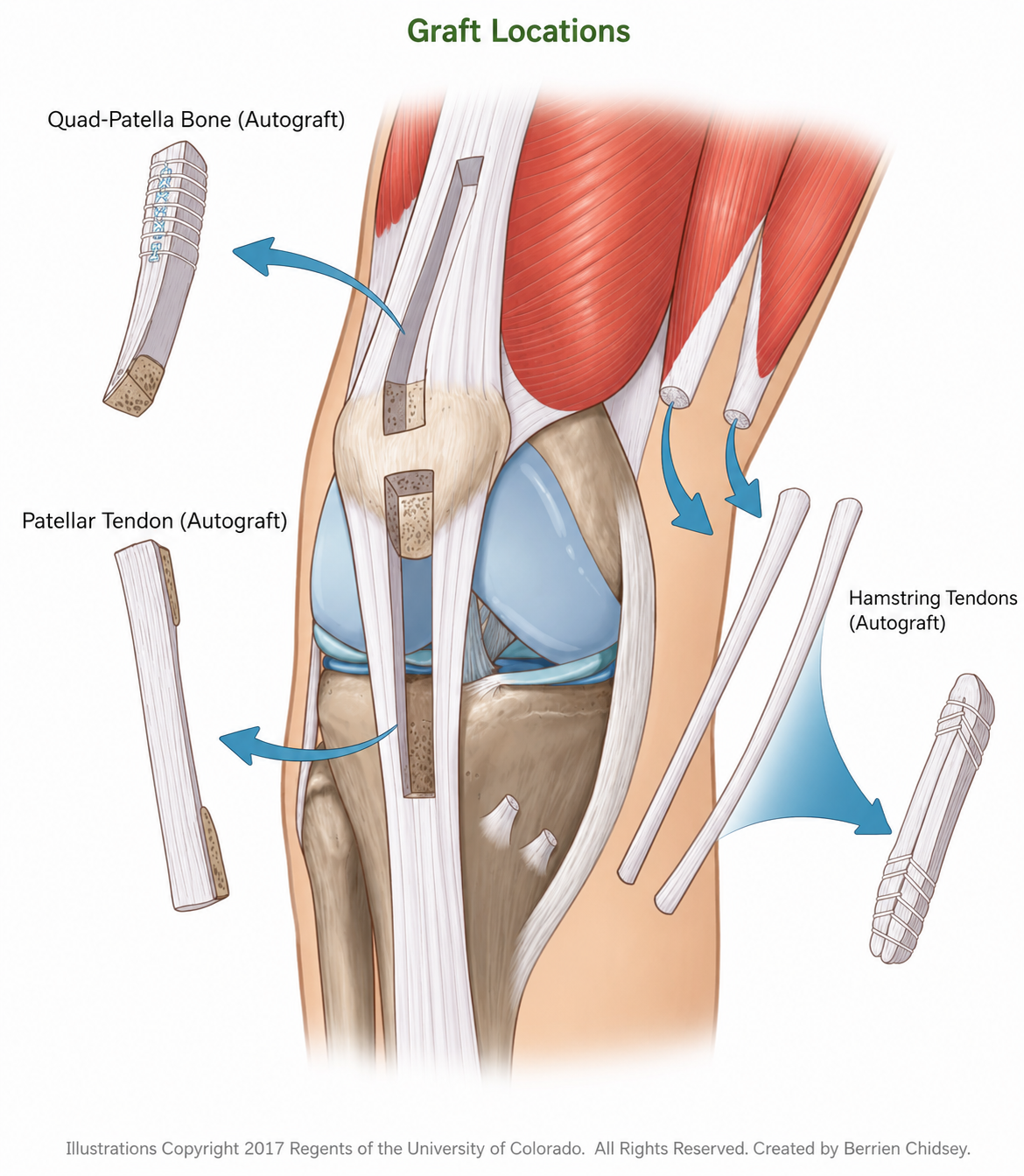
The patellar tendon graft — also called bone-tendon-bone (BTB) — has the longest evidence base of any ACL graft and has historically been considered the gold standard, particularly for high-demand athletes.
A central third of the patellar tendon is harvested along with bone plugs from the patella and tibial tubercle. The bone-to-bone fixation allows for reliable, rapid integration into the tunnels. The graft is strong, stiff, and well-studied across decades of follow-up.
The trade-off is donor site morbidity — anterior knee pain, kneeling discomfort, and a small risk of patellar fracture or tendon rupture. These symptoms typically resolve over time but can persist in some patients. Large-scale studies including the MOON Knee Group consistently show BTB to have the lowest re-rupture rates among autograft options.
Hamstring tendon
The hamstring graft — typically the gracilis and semitendinosus tendons harvested from the inner thigh — is one of the most widely used ACL grafts worldwide. It produces a soft tissue graft that is folded to create a quadruple-strand construct.
The hamstring graft has less anterior knee morbidity than the patellar tendon and is associated with less post-operative pain in the early recovery period. Fixation relies on soft tissue healing into the bone tunnel rather than bone-to-bone integration, which takes longer.
Re-rupture rates are slightly higher than with BTB in some studies, particularly in younger female athletes where hamstring graft diameter can be smaller. Graft diameter matters — smaller grafts carry higher failure rates. Some surgeons augment with additional strands or choose a different graft in patients predicted to have a small hamstring.
Quadriceps tendon
The quadriceps tendon graft has grown significantly in popularity over the past decade and is now considered by many surgeons to be a preferred option, particularly for younger patients, larger defects, and revision cases.
Harvested from the front of the thigh, the quadriceps tendon produces a large-diameter graft with excellent mechanical properties. It can be harvested with or without a bone plug from the patella, offering flexibility in fixation technique.
Donor site morbidity is generally lower than with patellar tendon. Long-term data continues to accumulate, and early results are favorable. For patients who are athletes in kneeling-heavy sports, the quadriceps graft may be advantageous by avoiding anterior knee pain.
Allograft
Allograft — tendon tissue from a cadaveric donor — eliminates the donor site entirely, reducing early post-operative pain and potentially speeding initial recovery. It is processed and sterilized before implantation.
The significant limitation of allograft is re-rupture risk. Multiple large studies — including data from the MOON Knee Group — demonstrate that allograft carries approximately three times the re-rupture risk of autograft in young, high-demand patients. This risk differential is most pronounced in patients under 25 returning to cutting and contact sports.
In older, lower-demand patients, the re-rupture risk difference narrows considerably, and allograft is a reasonable option. It is also commonly used in revision cases where autograft tissue is unavailable or limited.
Every young competitive athlete should have a detailed discussion about this risk before choosing allograft. The convenience of no donor site does not outweigh a threefold increase in failure rate in the patients who need their reconstruction to last.
What the evidence says about graft choice
The MOON (Multicenter Orthopaedic Outcomes Network) study — one of the largest and most rigorous ACL outcome registries in the world — provides the clearest guidance on graft selection:
• Autograft outperforms allograft in patients under 25 returning to sport. The re-rupture rate difference is clinically significant and should drive decision-making in young athletes.
• Among autograft options, patellar tendon, hamstring, and quadriceps tendon all perform well. Re-rupture rates are similar when graft diameter and fixation are optimized.
• Graft diameter matters — smaller hamstring grafts (under 8mm) carry higher failure rates. Preoperative MRI can predict graft diameter and guide selection.
• Rehabilitation matters as much as graft choice — completing a structured return-to-sport program with objective criteria reduces re-rupture risk by 40–60% regardless of graft type.
The lateral extra-articular tenodesis (LET)
The lateral extra-articular tenodesis (LET) is an additional procedure performed alongside ACL reconstruction — not instead of it. It has emerged as an important adjunct in specific high-risk patients and is one of the most discussed developments in ACL surgery over the past decade.
What problem does LET address?
Standard ACL reconstruction restores anterior-posterior stability of the knee well. However, it does not fully restore rotational stability — particularly the pivot shift phenomenon, which is the rotational giving-way that many patients feel during sport.
The pivot shift is driven not only by ACL deficiency but also by laxity of the anterolateral structures of the knee — the anterolateral ligament (ALL) and the iliotibial band. Even a well-performed ACL reconstruction can leave residual rotational laxity if these structures are not addressed.
What is a LET?
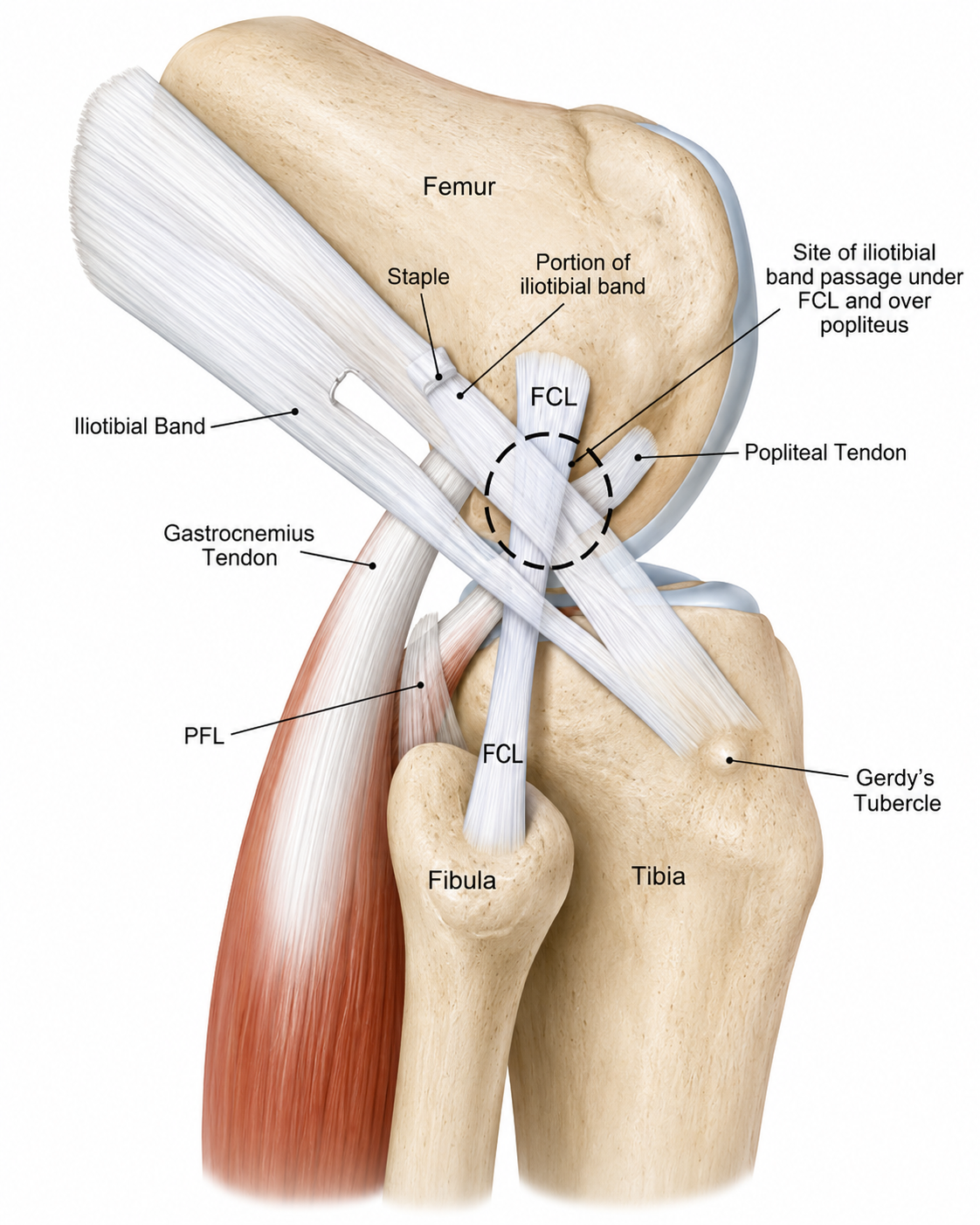
A lateral extra-articular tenodesis involves using a strip of the iliotibial band (IT band) — a thick band of tissue on the outside of the thigh — and rerouting it under a structure called the fibular collateral ligament, then securing it to the lateral femur.
This creates an additional restraint to internal rotation of the tibia — the motion that drives the pivot shift. The LET works outside the joint (extra-articular), complementing the intra-articular ACL graft.
The modified Lemaire technique is the most widely studied LET procedure and has the strongest evidence base. It is a relatively simple addition to the ACL reconstruction, adding approximately 15 to 20 minutes of operative time.
Make it stand out
Who benefits from a LET?
LET is not for every ACL patient. The evidence supports its use in specific high-risk groups:
• Young patients (under 25) returning to cutting and pivoting sports — the highest risk group for re-rupture
• Patients with significant pivot shift on pre-operative examination — indicating significant rotational instability
• Revision ACL reconstruction — where the risk of a second failure is already elevated
• Generalized ligamentous laxity — patients who are hypermobile are at higher risk of rotational failure
• High-demand athletes in contact or multidirectional sports
In lower-risk patients — older individuals, those in low-demand sports, or those with minimal pivot shift — the additional benefit of LET may not justify the extra procedure.
What does the evidence show?
The STABILITY trial — a landmark randomized controlled trial published in the American Journal of Sports Medicine — is the highest-quality evidence on LET to date. It randomized young active patients undergoing ACL reconstruction with hamstring graft to receive LET or not.
At two-year follow-up, the LET group had a significantly lower re-rupture rate compared to ACL reconstruction alone (4% vs 11%). The number needed to treat to prevent one re-rupture was approximately 15.
Importantly, the LET group did not show increased rates of stiffness, pain, or other complications — addressing a concern that extra-articular procedures might cause problems of their own. Longer-term follow-up data continues to show maintained benefit.
How graft choice and LET interact
Graft choice and LET are not independent decisions — they are considered together as part of an overall instability risk assessment.
A young athlete under 20 with significant pivot shift, playing contact sport, may benefit from both a patellar tendon graft (lowest re-rupture rate) and a LET (reduces rotational failure). An older recreational athlete with minimal pivot shift may do well with a hamstring graft and no LET.
The goal is to match the reconstruction to the individual risk profile — not to apply the same approach to every ACL tear.
What recovery looks like
Recovery from ACL reconstruction is a staged process that should be driven by biological and functional criteria, not time alone.
• Weeks 1–4: Swelling control, brace, partial weight bearing, regaining extension.
• Weeks 4–12: Progressive weight bearing, range of motion restoration, quad activation.
• Months 3–6: Strengthening, proprioception, early running when criteria met.
• Months 6–9: Sport-specific training, agility, return-to-sport testing.
• Months 9–12+: Return to full competition after passing objective criteria — strength symmetry, hop testing, psychological readiness.
Adding a LET does not significantly change the rehabilitation timeline. Protected range of motion in the first 6 weeks is recommended to protect the extra-articular repair.
Summary
ACL reconstruction outcomes are driven by three factors that interact: graft choice, the decision to add LET, and the quality of rehabilitation. Each decision should be individualized based on patient age, sport, laxity profile, and risk tolerance.
The evidence is clear that in young, high-demand athletes, autograft outperforms allograft, and LET reduces re-rupture risk when added to the reconstruction. For lower-risk patients, simpler approaches remain appropriate.
References
MOON Knee Group. Graft selection in ACL reconstruction — multicenter outcomes data. AJSM. Multiple publications 2011–2024.
Getgood AMJ, et al. Lateral extra-articular tenodesis reduces failure of hamstring tendon ACL reconstruction: 2-year outcomes of the STABILITY study RCT. Am J Sports Med. 2022;50(14):3840-3850.
James C. Messina, MD
Orthopedic Surgery · Sports Medicine · NYU Langone Long Island
Commack, NY · 631-919-6262
Disclaimer: This article is for educational purposes only and does not constitute medical advice. Consult a qualified physician for evaluation and treatment of any medical condition.
